Background
The war with Hamas, and the clashes with Hezbollah in the north have had a strong impact on the Center and take center stage. Our staff and volunteers are committed to ensuring the safety and wellbeing of our dogs. The Israel Guide Dog Center is located within firing range of Gaza. In the initial weeks of the war, the staff and guests were forced to run, from time to time, to the safe-room shelter. Courses to partner guide dogs and PTSD clients were canceled or postponed.
80% of our puppy raisers are university students, and the vast majority were called into the IDF reserves. The result was that many of our puppies had to be temporarily rehomed, often with former puppy raisers. The training of these puppies is critical prior to their returning to the Center for assessment and subsequent training as career dogs. Delays in the puppy raising program could delay the training and partnering of these dogs with both PTSD clients and clients with blindness. Some clients with blindness lost their sight during their IDF service.
Our Puppy Department was forced to adapt to the new circumstances and ensure that all the puppies were being well cared for and were being trained accordingly. Some puppies and dogs were housed temporarily in the kennels. At the same time, the Center was inundated with requests for Emotional Support Dogs.
Emotional Support Dogs for families from the Gaza Envelope Region
Due to the war, the Special Needs Department was forced to make drastic changes in all areas of their work. They altered the criteria for receiving a Special Needs Dog in order to provide an immediate response to those injured or suffering due to the war. Many people described the traumas that they had endured, existing symptoms that were exacerbated as a result of the war, including a significant worsening in the emotional state of children and adults with special needs. Some told of children unable to leave their rooms or adults suffering from depression and panic attacks. Families who received dogs prior to the war, reported that their dogs provided support to better cope with panic attacks, insecurity and fears during incoming missile attacks, or the absence of a parent for long periods of time, due to IDF conscription, and other reasons. We have been approached by some bereaved widows of fallen soldiers and evacuees from the southern and northern fronts; some of these individuals are not quite ready, emotionally or practically, to receive a Special Needs Dog.
October 7th, NOVA Festival, Kibbutz Re’im
On October 7th , one of our PTSD graduates, Dor Hanan Shafir z”l, and his girlfriend Savyon Chen Kipper z”l were murdered during the massacre at the Nova Music Festival at Kibbutz Re’im. Dor, an IDF vet, had been partnered with his Service Dog, Doris. His life turned around completely.
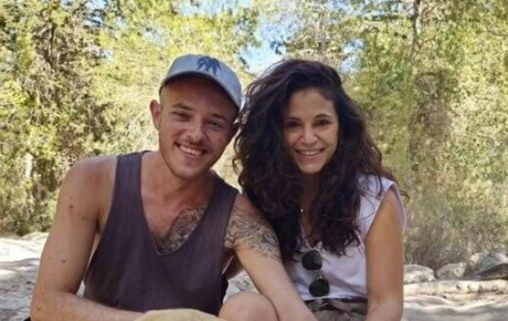
His family, who have been displaced from their home in northern Israel, said that the last three months of his life were Dor’s happiest. Dor and his girlfriend Savyon moved in together. They were planning to marry and build a new life. Dor’s Service Dog was not with him at the time. After been rescued from Dor’s locked apartment, she was returned to the Center temporarily. The family was interested in having Doris repartnered with a friend of Dor’s, a PTSD veteran. When this didn’t work out, the family requested that Doris live with them to help them cope with the trauma of loss. Doris was a living connection with Dor, during the last months of his life.
Dor, aged 30, had graduated with honors in communications from the Sapir College of the Negev, and produced the podcast “Making History” from 2021-22. He had a business in narration, sound and video editing. Dor was a combat soldier during Operation Protective Edge in 2014. He suffered from Post Trauma, and worked to raise awareness among the public about the challenges faced by combat survivors. He was partnered with Doris, a PTSD Service Dog, in July 2023.
Below are two of the October 7th emergency cases we have dealt with.
October 7th Kerem Shalom
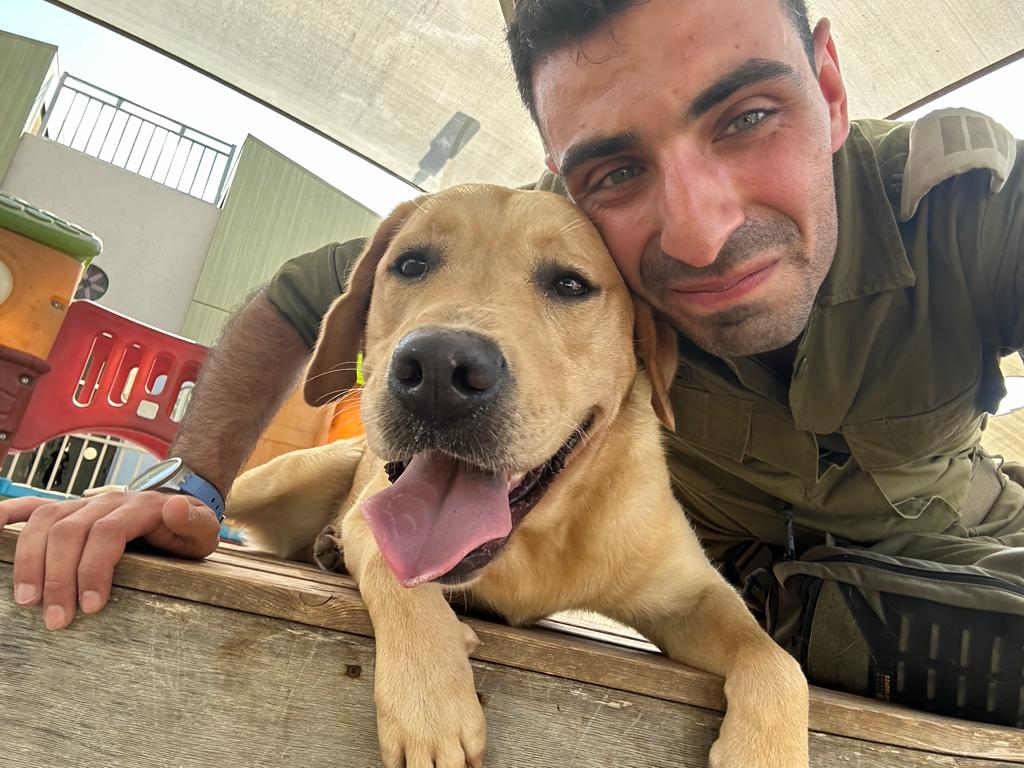
One of the young IDF soldiers stationed at Kerem Shalom, who survived the attack, but witnessed the murder and injury of many of his colleagues, had an emotional breakdown afterwards. As a result, he was discharged from the army, and is suffering from severe post- trauma. His family had been puppy raisers, and knew the value that a dog could have in their son’s subsequent rehabilitation. We immediately responded and gave them an emotional support dog. In time, M. (name withheld) will be eligible to receive a trained PTSD Service Dog. In the meanwhile, the dog M. received provides the comfort and support that M. requires at this time.
M. wrote a letter to the Center. Click here to read.
Dear staff members of the Israel Guide Dog Center,
Five years ago my family and I had the honor of fostering a puppy. We all had an immediate connection with the charming puppy and within the year we grew to love him unconditionally. Returning him to the center was hard, yet we remained in contact with the center and the person who received the dog which enabled us to visit and continue our relationship with the puppy we raised. Since then, I learned the importance and value of service and guide dogs.
Throughout the Swords of Iron war, I fought as a soldier in an elite unit. I was a part of the battle that took place in a kibbutz near Gaza, during the first attack on October 7th, Saturday morning. My friends around me got injured and killed and we saw things that were difficult to witness. That experience was traumatizing to the point where I had to stop my service.
While going to treatments, I would see support dogs that came to army bases or the hospital as part of offering comfort to the wounded. Without any hesitation, I understood that a support dog would help me immensely at this point in my life. I knew that the dog would give me the emotional support I needed. I saw how caring for a dog, being active, and nursing them could help me overcome such a hard time.
I would like to thank the team at the Israel Guide Dog Center who came to my assistance right away and were able to match me up with a dog at such short notice.
October 7th , Kibbutz Be’eri
In December we received a phone call from a young woman, D. who was with her boyfriend in Kibbutz Be’eri during the rampage. She had visited the center the year prior, and was a dog lover. D. aged 21, made Aliyah from South Africa. Her boyfriend was born and raised in Kibbutz Be’eri. During the October 7 th attack, she and her boyfriend were in a safe-room shelter. They remained in the dark shelter, without proper ventilation, food and restrooms for 30 hours, until they were rescued and allowed to leave the shelter. Fortunately, their part of the kibbutz was overlooked by the terrorists. However, what they lived through and witnessed left immediate scars. They were in trauma. When we met them, they had been staying in an Airbnb in Tel Aviv for a number of weeks.
We invited them to the Center to match them up with an emotional support dog. They came to the Center, but the trauma they suffered was evident in their faces. We gave them an emotional support dog. We continue to provide support as required.
October 8th – Rescuing Dogs
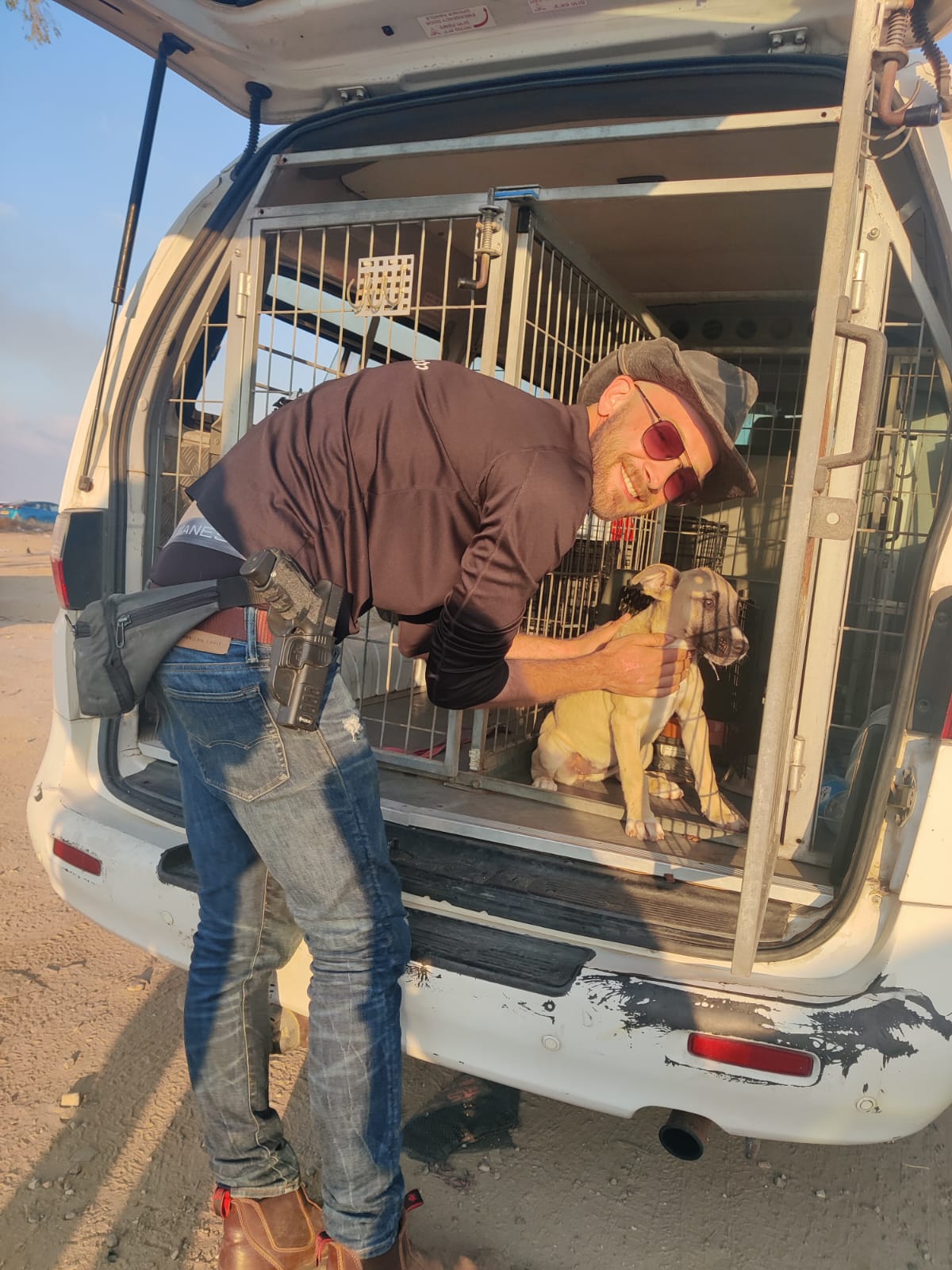
Noah Kaplan, a staff member of the Center, worked with a group of like-minded volunteers to rescue dogs from the areas around the Gaza region. Some of the dogs were wandering around, others were locked up in their homes. The work was coordinated with the IDF. All of the dogs were traumatized, and many gone days without food and little access to water. Using one of our training vans and bringing food from the Center, they saved 300 dogs in one week alone. They made great efforts to find the owners and, if necessary, to rehome them.
Staff and Puppy Raisers Raise Spirits
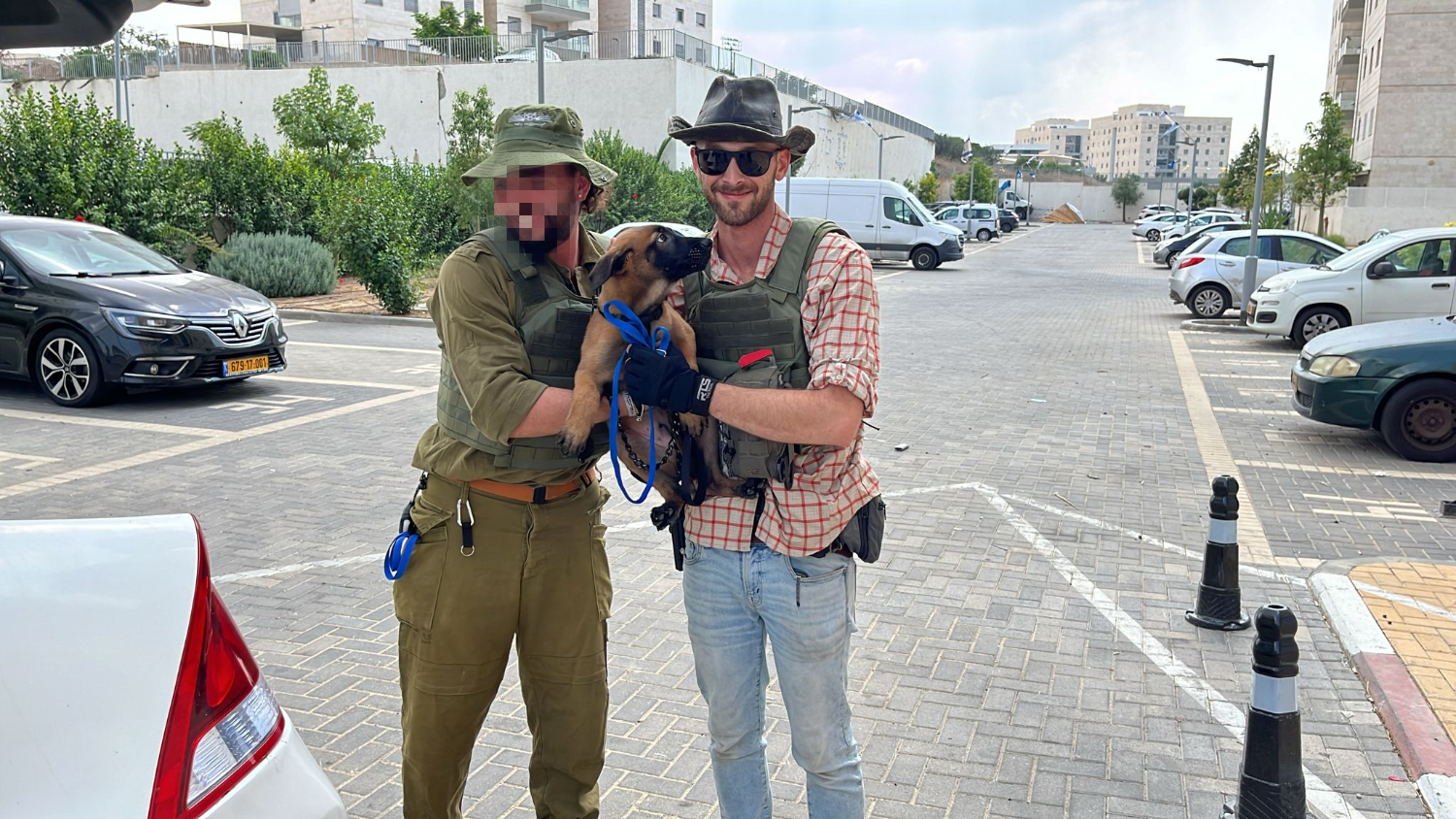
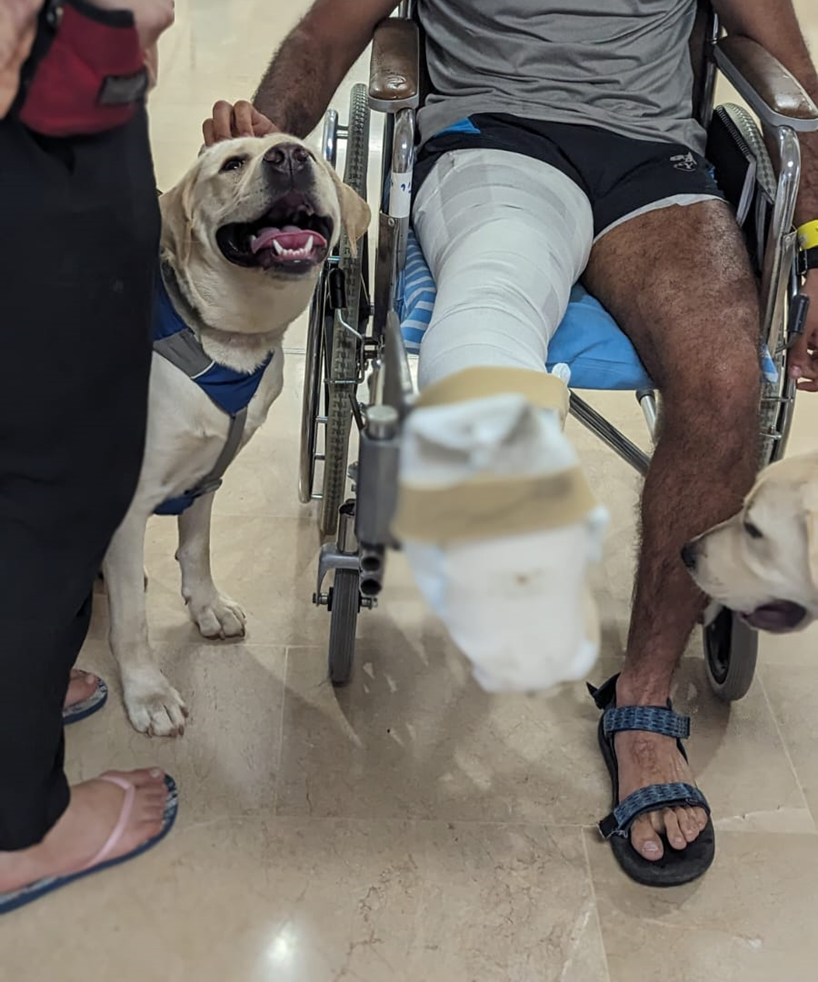
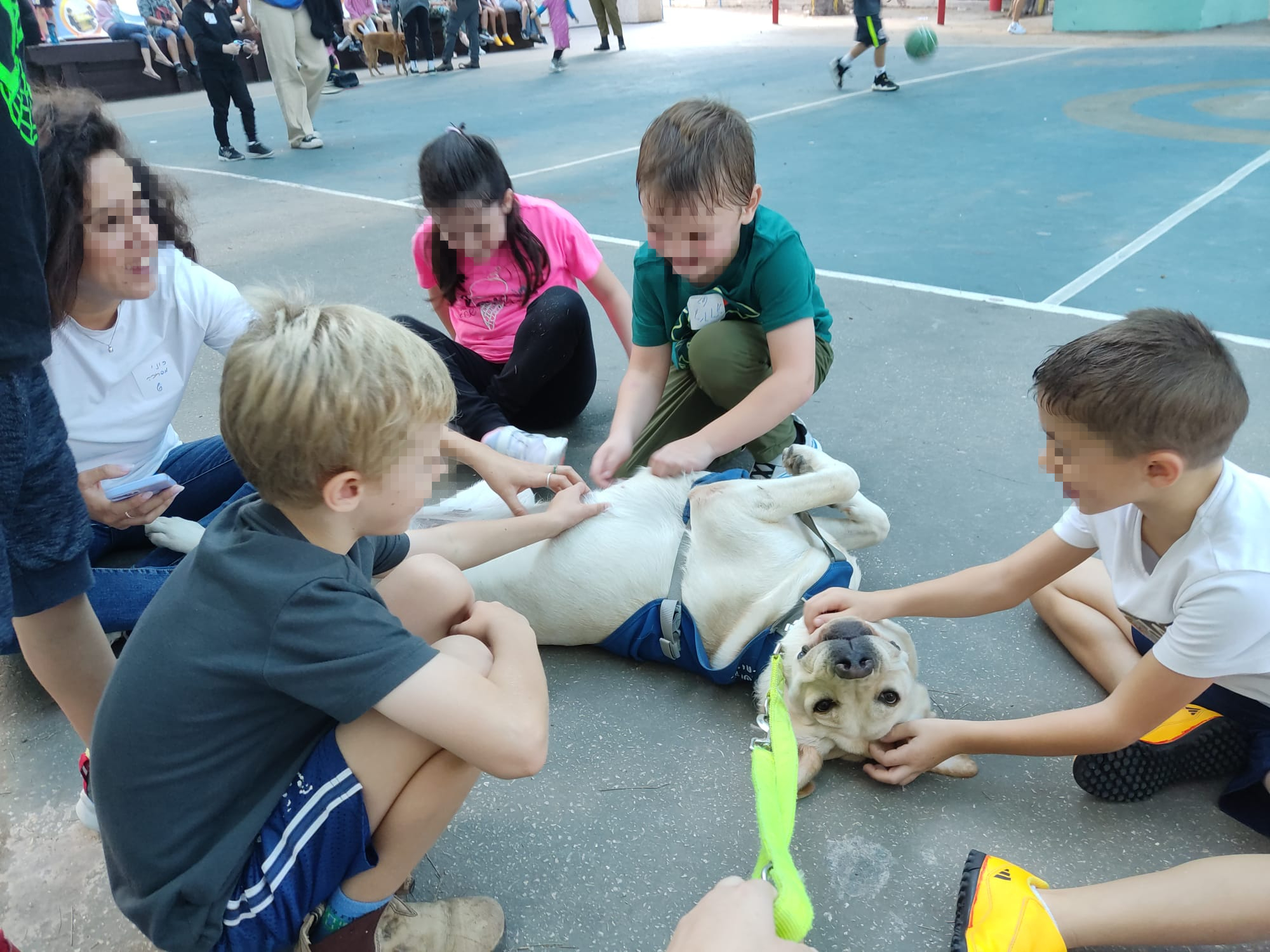
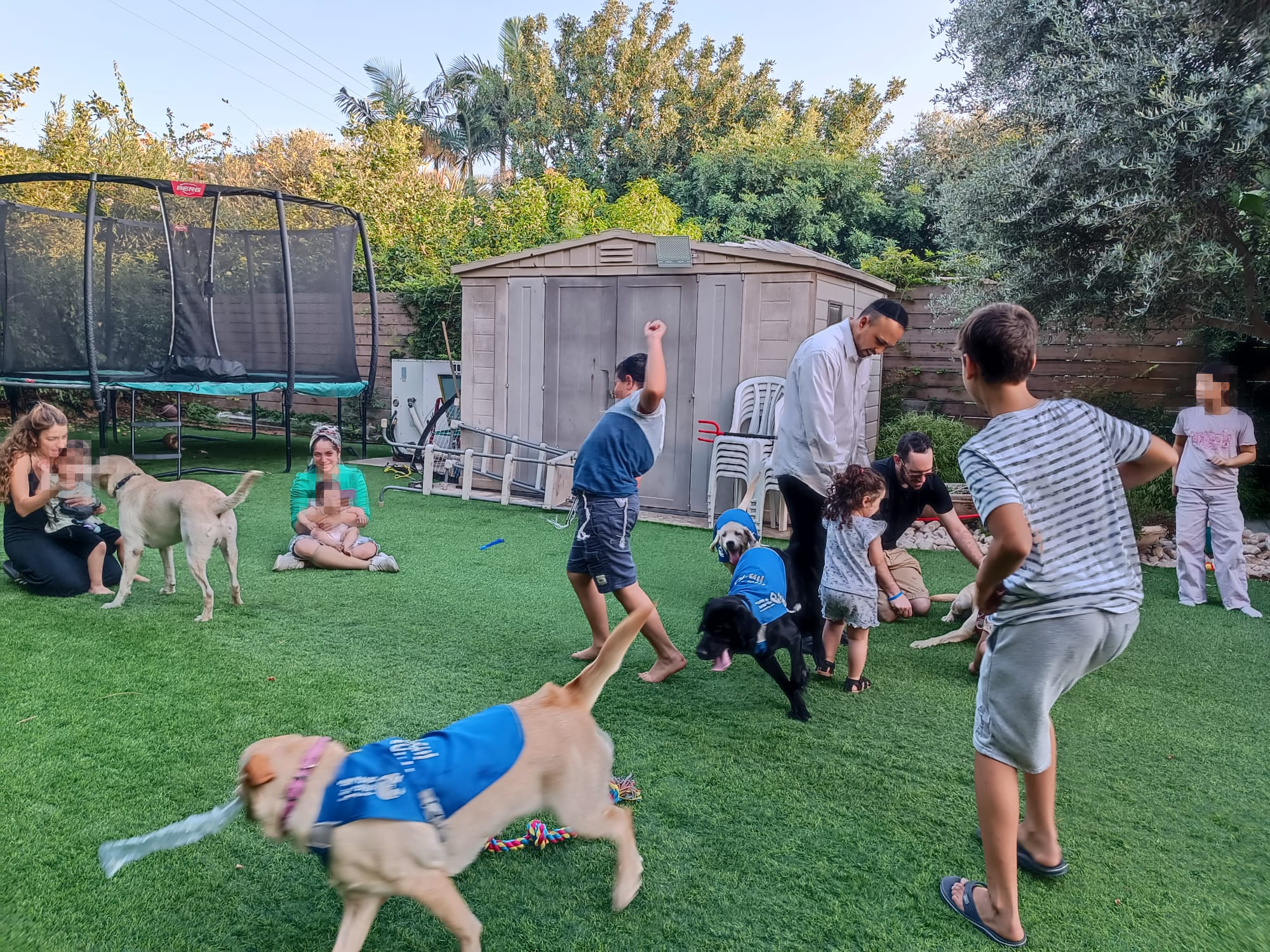
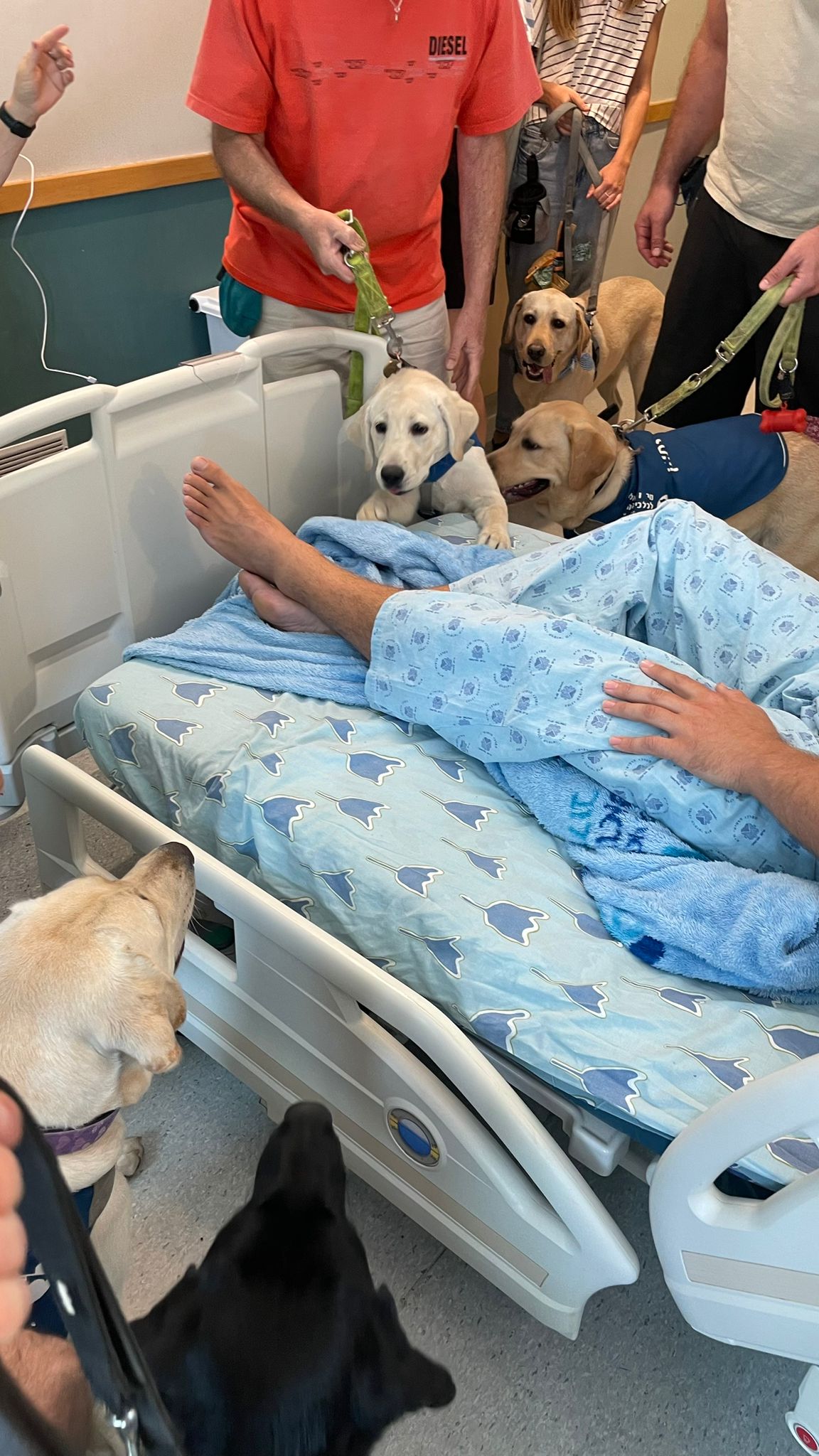
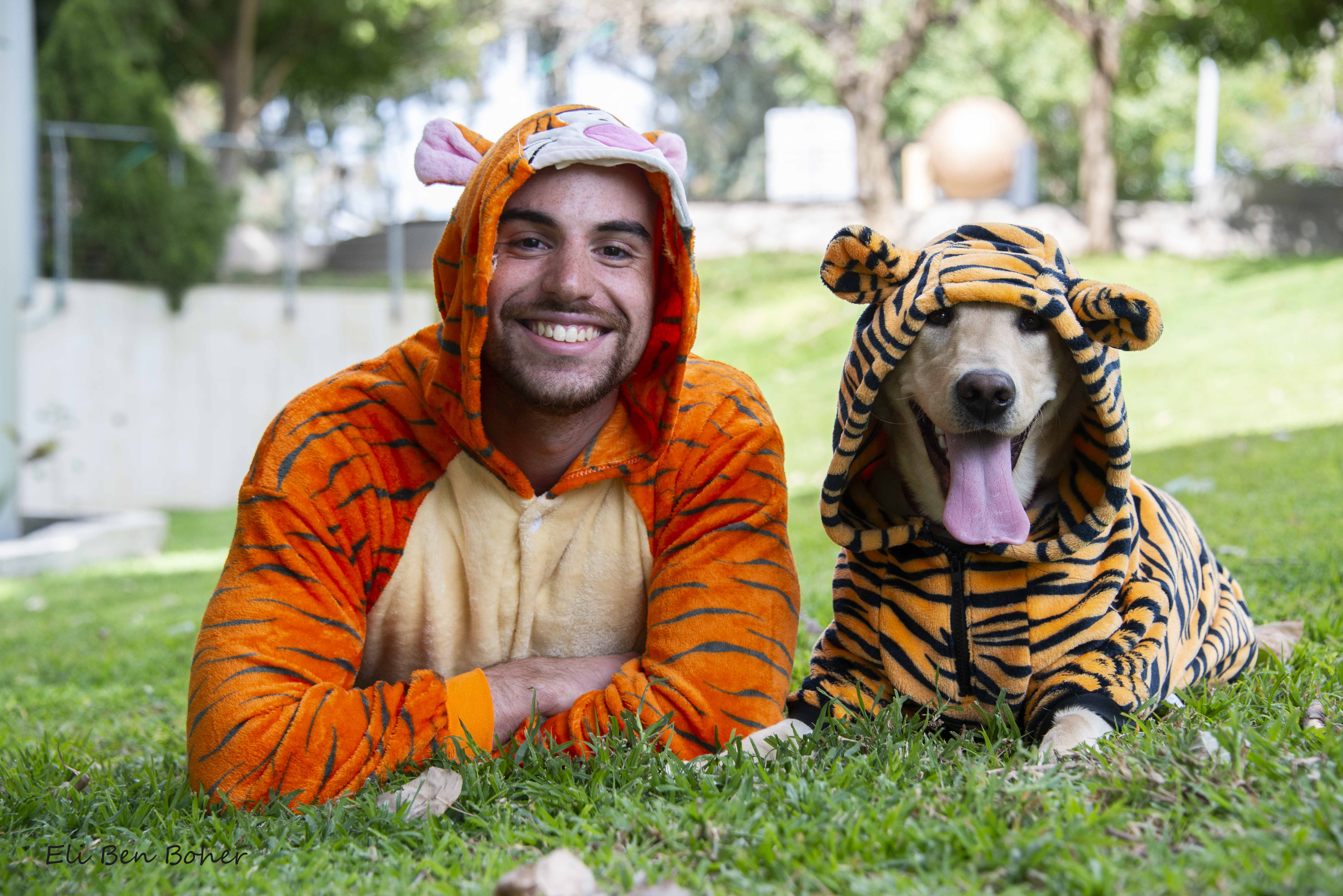
Our staff and puppy raisers are visiting injured IDF soldiers, traumatized Israelis in hospitals, and evacuees in shelters, to comfort them with our dogs and puppies. There is nothing more powerful and healing than seeing the smiles on the children's faces, after the trauma they endured. One of our former puppy raisers, Meitar Sela organizes our puppy raisers and guide dog users to visit the IDF soldiers in the hospitals. The initiative is called IDF Tsav 8 (named after the emergency order inducting individuals into the reserves). Last week, there was a Purim costume contest with our puppies in Tel Hashomer hospital.
Collecting Bicycles for the Children
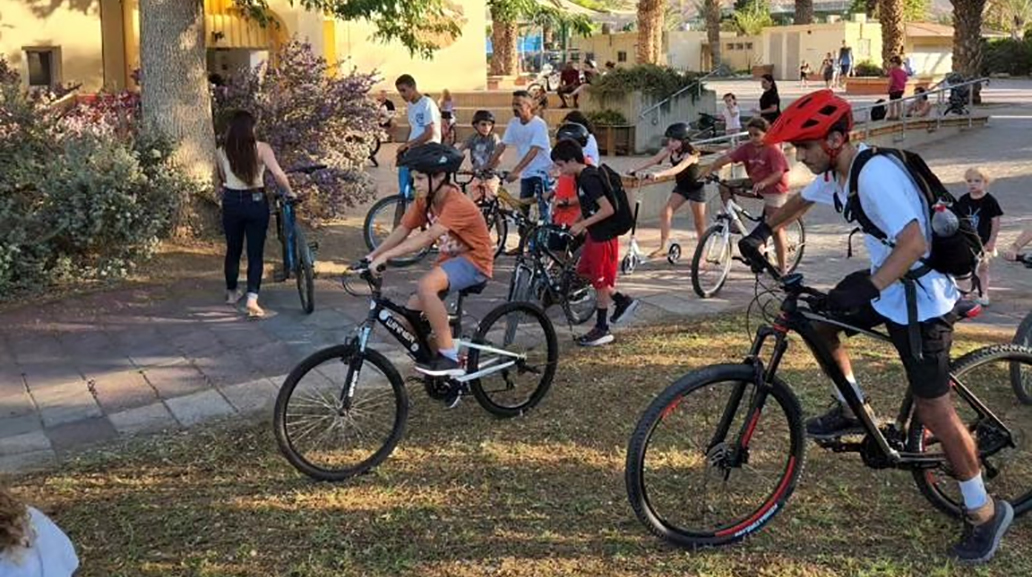
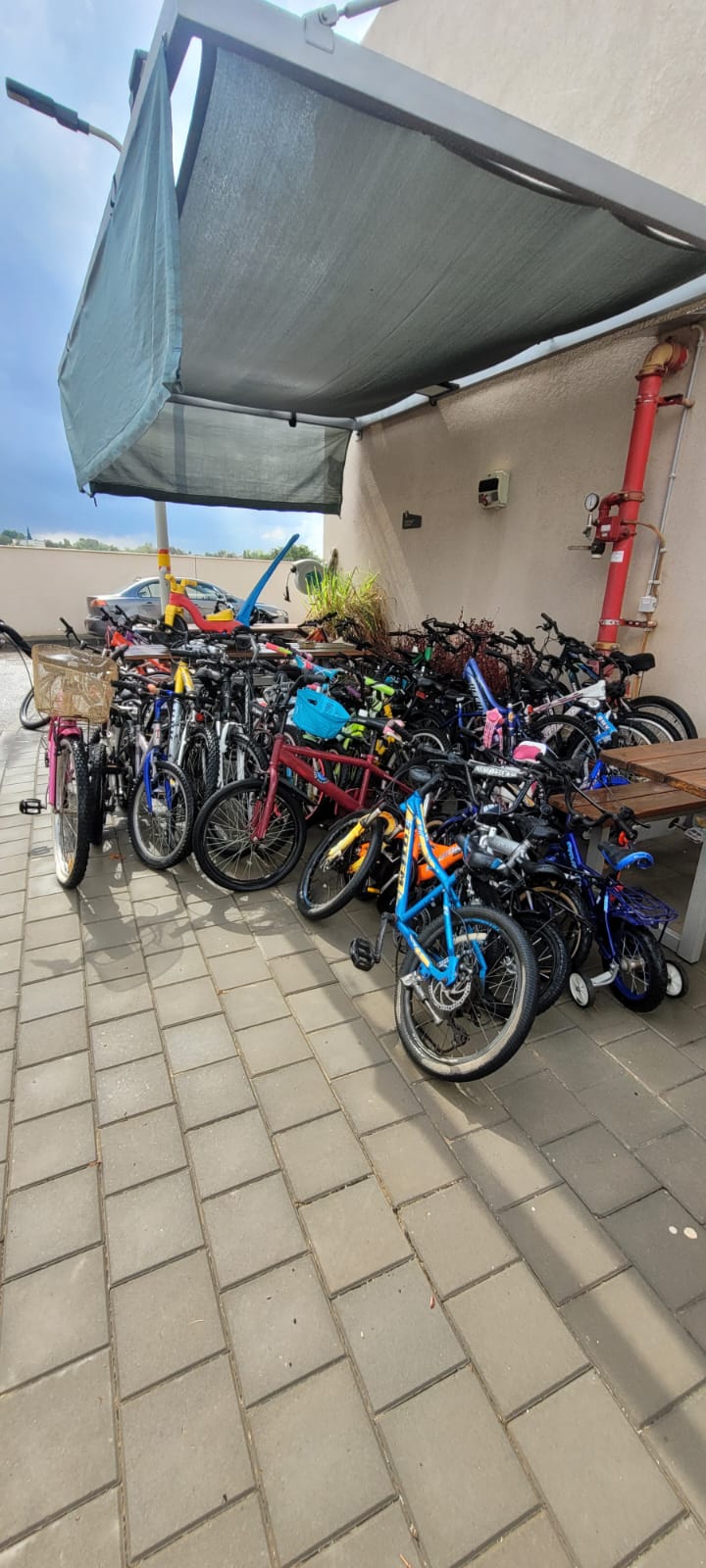
Our CanVelo Tandem Bike Group initiated a program “A Bike for Every Child” To date, our CanVelo group has collected and distributed over 3300 bicycles to give to the displaced children.
Our PTSD Service Dog program for IDF Veterans
The training of Service Dogs for IDF veterans who suffer from PTSD began 6 years ago as one of the first organizations in Israel to work with IDF veterans. We are the only organization in Israel that is recognized internationally as members of Assistance Dogs International, an umbrella organization that brings together Service Dog organizations around the world, and ensures uniformity in standards. In 2022, we began working in coordination and partnership with the Ministry of Defense. Service Dogs create a support system for the post-trauma sufferer, which allows the person to go out and interact with the environment, acting as a barrier between the person and society, when needed. The dogs will wake the person up from nightmares and comfort them as well. Regarding how the connection between the person and the dog has helped our IDF veterans: one soldier started going out on dates again since the Service Dog came into his life, another began performing again as a singer with the dog by his side, and yet another soldier began leaving the house, going to the supermarket for the first time in months. However, due to the war, the PTSD Department is experiencing a marked increase in enquiries. We’ve been approached by soldiers who were diagnosed prior to the war and seriously affected by current events who suffer from symptoms such as intrusive thoughts, nightmares, seclusion, heightened alertness, vigilance and constant tension. In addition, our PTSD graduates are also suffering from flashbacks and increased stress as a result of the war and their memories. Our psychologist and psycho-therapists are working intensively to deal with the impact of the war on our graduates.